


How Many Hairs Are on a Human Head? Averages by Hair Colour

Medically reviewed by Prof. Dr. Soner Tatlıdede, Hair Transplant Surgeon — 22+ years, 18,947 procedures · September 2026
The average human head has about 100,000 hairs, with a typical range of roughly 90,000 to 150,000. The exact number depends mostly on your natural hair colour and genetics, and it changes with age. This guide covers the average counts, hair density per square centimetre, how many hairs you lose each day, and how much hair can be lost before thinning becomes visible.
How many hairs are on the average human head?
Most estimates put the number of hairs on an adult scalp at around 100,000, which roughly matches the number of hair follicles on the scalp. Across the whole body there are about 5 million hair follicles, but most of them grow fine, short vellus hair rather than the thick terminal hair on the scalp.
Number of hairs by hair colour
Natural hair colour is the biggest single predictor of hair count. People with fine, light hair tend to have more hairs; people with thicker strands tend to have fewer.
| Natural hair colour | Average number of scalp hairs |
|---|---|
| Blonde | about 150,000 |
| Brown | about 110,000 |
| Black | about 100,000 |
| Red | about 90,000 |
These are commonly quoted averages, not fixed rules. Because thicker strands cover more of the scalp, a lower count does not necessarily mean hair looks less full.
Hair density: how many hairs per square centimetre?
On a healthy adult scalp, density is typically in the range of about 120 to 200 hairs per square centimetre. Hairs grow in small natural groups called follicular units of one to four hairs, so the number of follicular units per square centimetre is lower than the number of hairs. Density is usually highest at the back and sides of the head, which is why that area is used as the donor area in a hair transplant.
How many hairs do you lose a day?
Losing about 50 to 100 hairs a day is normal. At any time, most scalp hairs, roughly 85 to 90 percent, are in the growth phase, which lasts several years; the rest are resting or shedding and are replaced by new hairs from the same follicles. Shedding can temporarily increase after illness, stress, childbirth or seasonal changes. See how many hairs fall out a day and telogen effluvium for when it is more than normal.
Does the number of hairs change with age?
Yes. Density tends to fall gradually with age, and in people with a genetic tendency to pattern hair loss, follicles on the top of the head shrink over time and produce finer, shorter hairs. This process, called hair miniaturization, is why thinning is often noticed first as the scalp showing through, rather than as a lower hair count.
How much hair can you lose before it shows?
A lot. Thinning is often not noticeable until a large part of the original density in an area has been lost, commonly quoted as around half. That is why pattern hair loss can progress for years before it becomes obvious, and why treatment works best when started early.
What hair count means for a hair transplant
A transplant does not add hair; it redistributes it. Grafts are moved from the dense, permanent donor area at the back and sides to thinning areas, and the donor area can only give up a limited share of its follicles before it looks thin itself. That is why the number of grafts you can have depends on your donor area, not only on the size of the bald area. For how the numbers are worked out, see how many grafts do I need, or read about FUE hair transplant.
Frequently asked questions
How many hair follicles are on the human head?
About 100,000 on the scalp, roughly one per hair. There are around 5 million hair follicles on the whole body.
Do blondes really have more hair?
On average, yes. Natural blondes tend to have the highest hair count, around 150,000, and redheads the lowest, around 90,000, but individual strands of red hair are usually thicker.
Is losing 100 hairs a day normal?
Yes, up to about 100 hairs a day is within the normal range. Persistent heavier shedding, a widening parting or visible scalp is worth getting checked.



Medical Review by: Prof. Dr. Soner Tatlıdede – September 2026 Androgenetic alopecia (genetic male pattern baldness) is primarily driven by the hormone dihydrotestosterone (DHT), a potent byproduct of testosterone. The conversion of systemic testosterone into DHT occurs locally within tissue microenvironments via the action of the enzyme 5-alpha reductase (5-AR). When DHT binds to androgen receptors located in […]
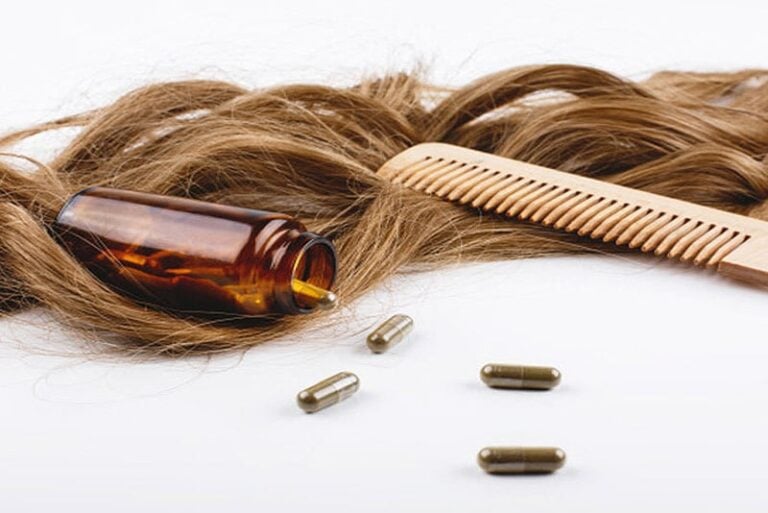
Medical Review by: Prof. Dr. Soner Tatlıdede – September 2026 Biotin, historically known as Vitamin B7 or Vitamin H, serves as an essential coenzyme for five key carboxylase enzymes (ACC1, ACC2, PC, PCC, and MCC) within human cellular mitochondria. These carboxylases are responsible for catalyzed carboxylation reactions crucial for fatty acid synthesis, gluconeogenesis, and the catabolism of branched-chain […]
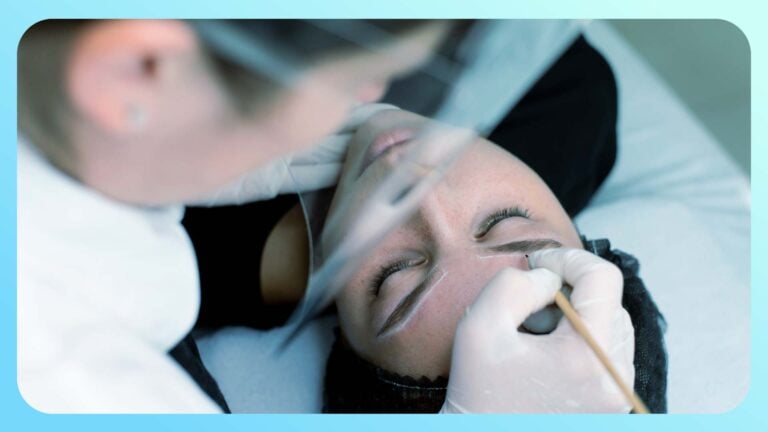
Medical Review by: Prof. Dr. Soner Tatlıdede – September 2026 Eyebrows serve a fundamental role in defining facial expressions, enhancing facial symmetry, and protecting the eyes from perspiration and debris. When eyebrow hairs begin to thin, break, or disappear completely, the loss deeply affects aesthetic confidence and overall facial harmony. Understanding whether your eyebrow shedding is caused by […]


Thank you!
Your details have been successfully submitted. Thanks!